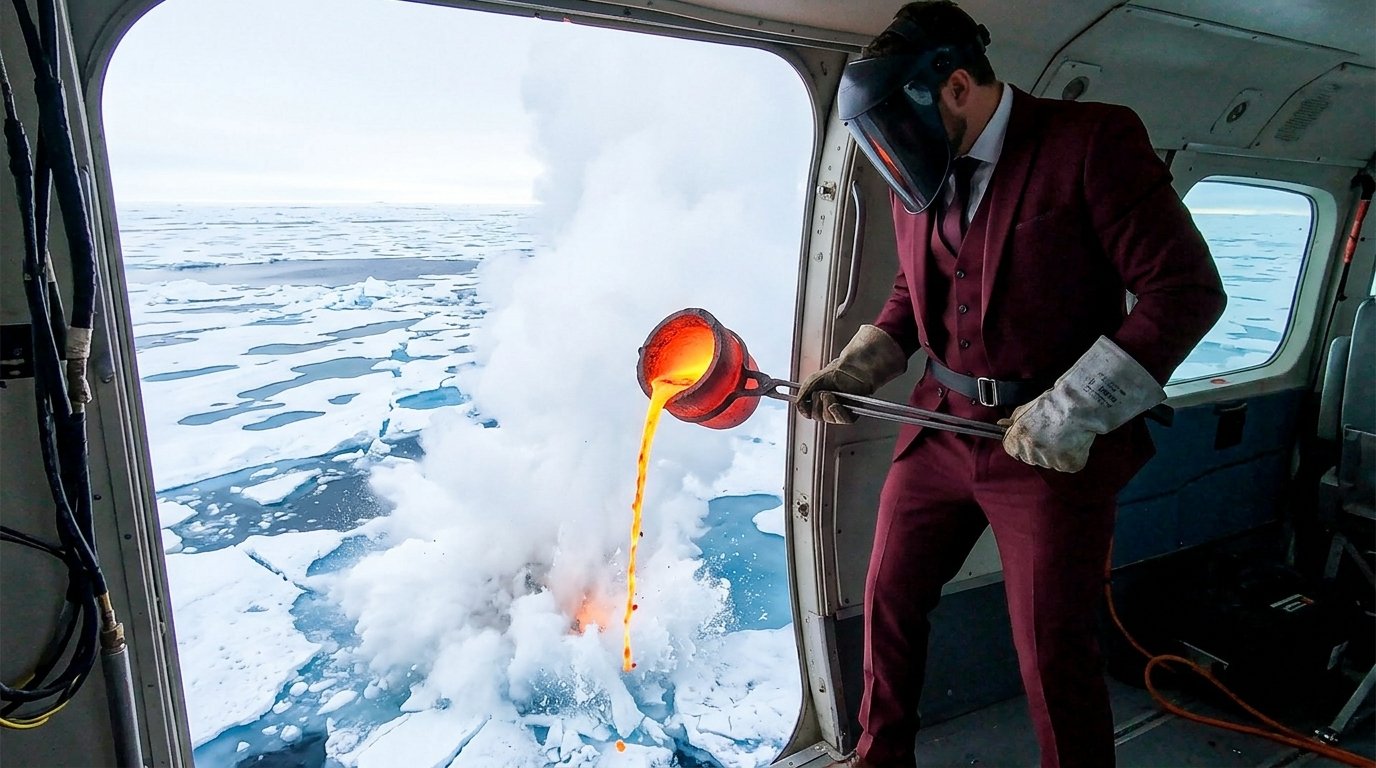
The line between ordinary AI generations and scroll-stopping digital art comes down to contrast, narrative stakes, and intentional physics. Whether you are directing a high-octane VFX simulation or framing a stylized character animation, the underlying design framework remains identical: clear subjects, tangible physical interactions, and defined visual atmospheres.
Bridging the gap between hyper-realistic CGI simulations and Pixar-inspired character vignettes requires understanding how to construct high-yield visual prompts from the ground up.
Anatomy of a Viral Scene: High-Energy Physical Contrasts
High-impact CGI visuals rely on extreme elemental conflict. Pairing molten lava with sub-zero Arctic ice immediately triggers visual tension that grips a viewer’s attention.
⚡ AI PROMPT
When building high-concept, photo realistic prompts, prioritise three core layers:
- Sartorial Incongruity: Placing formal wear (such as a tailored burgundy suit) inside an extreme utility setting (like an open helicopter door) creates an immediate narrative hook.
- Thermodynamic Reactions: Always prompt the consequence, not just the action. Specify the steam explosion, vapor plume, and fracturing ice rather than merely stating “lava touches ice.”
- Dynamic Perspective: Handheld or tracking camera motions simulate documentary-style reality, grounding impossible CGI scenarios in believable camera behavior.
Character Nuance: Expressive Storytelling in Stylized Animation
While physics drive hyper-realistic CGI, emotional micro-beats fuel 3D character animation. When working with Pixar- or Disney-inspired styles, clarity of gesture and cultural texture turn a flat render into a living scene.
| Narrative Element | Descriptive Execution | Visual Value |
| Cultural Setting | Ornate carpets, floral fabric rolls, handcrafted sewing supplies | Builds warmth and authenticity |
| Costume Detailing | Embroidered kurtas, olive green salwar kameez, fine silver jewelry | Adds surface depth and texture |
| Character Dynamic | Frustrated seamstress vs. calm companion | Sets up relational humor |
| The Comic Twist | Miniature girl with scissor-tongue making snipping motions | Introduces focal whimsy |
Exaggerated reactions work best when the environment feels grounded. Framing a domestic, relatable chore—like sewing or tailoring—makes the sudden appearance of a miniature, magical character land with genuine comedic impact.
⚡ AI PROMPT
Prompt Engineering Best Practices for Storytellers
To get predictable, production-ready outputs across diverse visual styles, keep your prompt syntax modular:
- Lock Down the Medium First: Specify
Pixar-style 3D animationorHigh-contrast CGI simulationin the opening 5 words to establish the rendering engine logic early. - Anchor the Lighting Model: Whether it is the cold directional glare of the Arctic sun reflecting off sea ice or warm volumetric golden hour spilling into an interior rug, light defines realism more than polygon count.
- Specify Surface Tactility: Words like embroidery, porous ice, red-hot iron, and brushed fabric force generative diffusion models to compute high-frequency surface detail, eliminating plastic-looking artifacts.