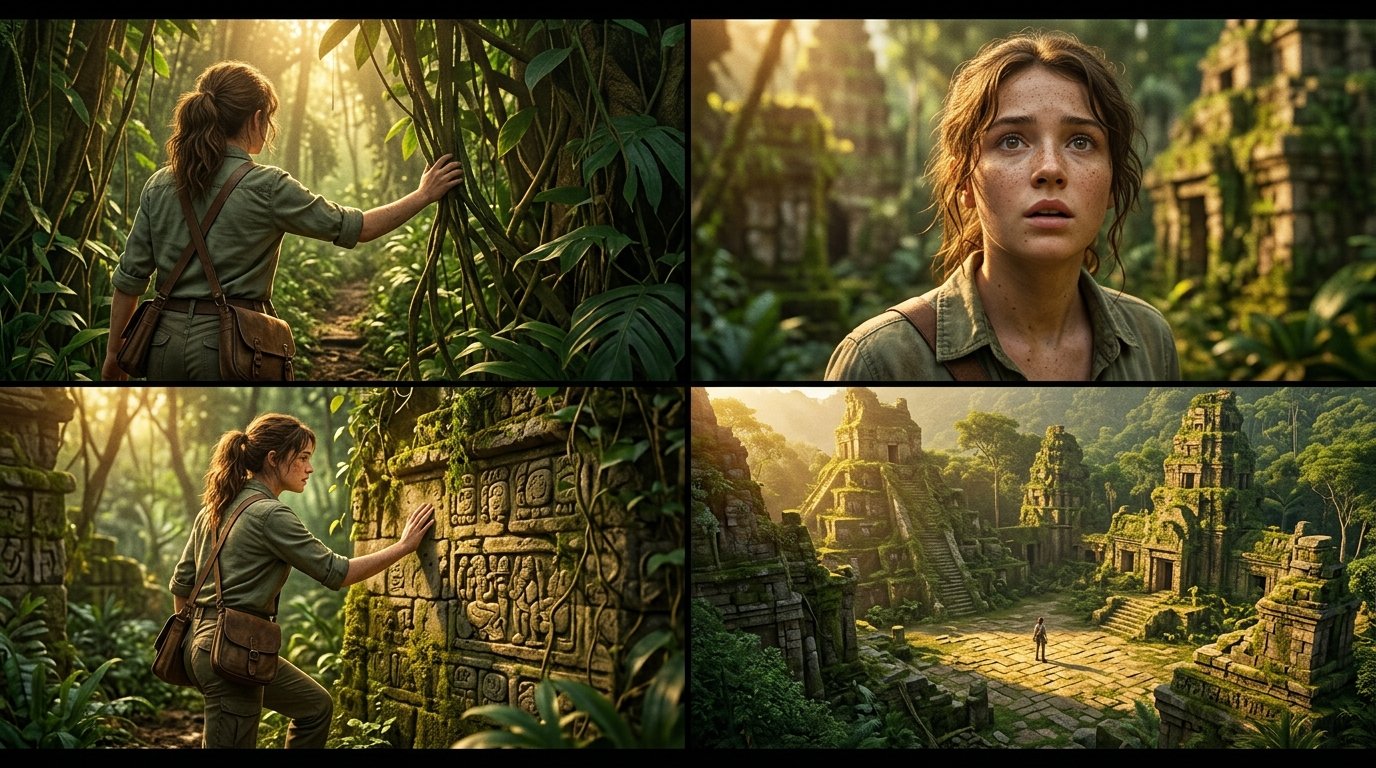
Every explorer remembers the moment the world goes quiet.
Deep under a jungle canopy, the wall of sound is usually relentless—the mechanical hum of cicadas, the shrieks of macaws, the constant drip of moisture sliding off broad, waxy leaves. But when an expedition cuts through the dense green tangle and stumbles upon something that human hands haven’t touched in centuries, the atmosphere shifts. The jungle suddenly feels less like raw nature and more like a tomb.
Modern exploration often looks less like Indiana Jones with a bullwhip and more like satellite telemetry and sweat-soaked GPS units. Yet, the raw thrill of discovering ancient, forgotten civilizations swallowed by the jungle remains one of the most romantic, challenging frontiers of human curiosity.
Here is what it really takes to uncover an ancient jungle metropolis—and why these discoveries matter more today than ever before.
1. The New Toolkit: Seeing Through the Green Ocean
For over a century, finding ruins in dense tropical rainforests—whether in the Petén Basin of Guatemala, the dense valleys of Cambodia, or the uncharted basins of the Amazon—depended entirely on machetes, local oral histories, and brutal foot marches.
Today, the greatest revolution in jungle archaeology is LiDAR (Light Detection and Ranging).
Mounted to light aircraft or drones, LiDAR fires hundreds of thousands of laser pulses per second down through the canopy. While most bounce off leaves and branches, a fraction penetrate to the ground level. When computer software strips away the vegetation, the hidden topography emerges
⚡ AI PROMPT
The Ground Truth: Machetes, Mud, and Microbes
Once an anomaly is identified from the air, the physical expedition begins. This is where high-tech gives way to raw grit.
Navigating virgin jungle means hacking through dense understory at a pace of less than a kilometer every two hours. Temperatures regularly hover around 35°C (95°F) with 95% humidity, turning every pack into a waterlogged weight. Explorers contend with venomous pit vipers coiled on low branches, clouds of chiggers, swarms of mosquitoes carrying dengue and malaria, and flash floods that can turn a dry ravine into a raging torrent in twenty minutes.
Then comes the moment of arrival Modern Explorers Walk.
Most jungle ruins do not announce themselves cleanly. Stone collapses under the invasive roots of strangler figs. Ceiba trees split plazas open. Moss and creeping vines soften sharp architectural edges until a carved lintel looks like just another fallen log.